
Governance Isn't a Feature: Why AI Coding Needs Reviewable Workflows
Maximize AI development efficiency by integrating robust governance frameworks from the onset. This approach ensures the visibility, reviewability, and alignment of outputs with human intent, safeguarding quality and reliability across workflows.
Why Governance is Crucial in AI Development
Governance in AI development is essential to maintain control and reliability over AI-generated outputs. While many AI tools focus on enhancing productivity by assisting with code writing and component refactoring, they often fall short of maintaining a reliable workflow without structured governance. This requires a thorough understanding of the requirements, approval boundaries, review processes, and decision documentation.
The Dangers of Ungoverned AI Development
Without a comprehensive governance structure, AI tools can lead development teams into chaos with scattered information. Developers might face issues like lost context, invisible decision-making paths, and unclear responsibility trails, making it impossible to produce scalable AI solutions. Consequently, without structured workflows, teams face the risk of generating unfounded AI 'shadow workflows' disconnected from project goals.
Prompt Engineering: A Partial Solution
While prompt engineering can elevate the quality of specific outputs, it cannot replace a thorough governance system. For a robust AI development process, the groundwork must be laid for decision preservation, comprehensive reviews, compatibility checks against original project intents, and establishing an accountable audit trail.
Components of a Reviewable AI Workflow
To ensure an effective AI governance model, integrate comprehensive features into your workflow: clear specifications, distinctly defined review paths, inclusive decision logs, scrutinizable work package breakdowns, and unambiguous approval guidelines. These measures ensure agility, accuracy, and accountability in AI development.
The Role of Spec Kitty in AI Development Governance
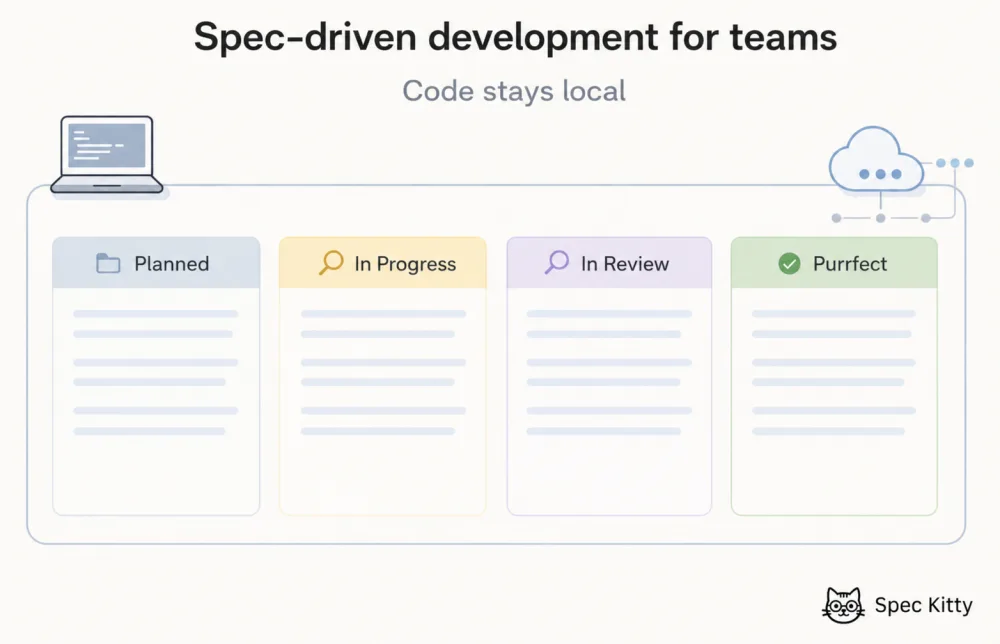
Spec Kitty offers a structured approach to AI-assisted development. It efficiently transforms tasks, intentions, and decisions into tangible, reviewable formats—such as specs, plans, and audit trails—thus ensuring a governed and robust workflow.
Step-by-Step Guide
- Define project specifications and scope.
- Create clear and structured review pathways.
- Document decision histories comprehensively.
- Break down tasks into manageable work packages.
- Ensure transparency and accessibility of project data.
- Implement human approval points for critical stages.
Frequently Asked Questions
What is AI governance for developers?
AI governance ensures AI work is visible and aligned with organizational standards.
Why do AI coding tools need governance?
Without it, AI outputs lack context, decision trails, and accountability.
What is an AI development audit trail?
An audit trail records intent, planning, decisions, reviews, and outcomes of AI tasks.
How does spec-driven development support governance?
It documents intent and review pathways before coding begins.
What makes a governed AI development platform distinctive?
It systematically manages, reviews, and validates AI work through structured controls.
The Key to Reliable AI Development
Ultimately, governance is not an obstruction but a facilitative framework ensuring that AI development projects remain grounded in human judgment and accountability. Combining AI advancements with governance structures empowers teams to accelerate development while retaining program integrity and trust.